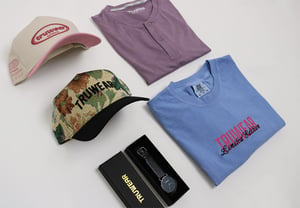
Quality custom-branded apparel is decided long before anyone stitches or prints your logo onto it. The garment underneath does most of the work, and no amount of beautiful decoration can rescue a shirt that feels thin, fits poorly, or falls apart after a few washes.
Most buyers focus their attention on the logo. They obsess over placement, color, and size, then choose the cheapest blank garment to carry it. That order gets the priorities backward.
A premium logo on a poor garment still reads as a poor garment. A thoughtful logo on a well-built piece becomes something people actually wear.
This article explains why apparel quality begins with the blank, who this matters to, and which details in fabric, fit, construction, and finishing separate keepable pieces from forgettable ones. You will also learn how decoration methods interact with garment quality and how to evaluate your options before you commit to an order.
Why Does Apparel Quality Start Before Decoration?
Apparel quality starts before decoration because the garment, not the logo, determines whether someone wears the piece or buries it in a drawer. Decoration adds your brand to a product that already succeeds or fails on its own merits.
Think of the logo as the finishing touch, never the foundation. People judge a shirt by how it feels on their skin and how it holds its shape, not by how cleanly the emblem sits on the chest.
When the base garment is excellent, the decoration elevates it further. When the base garment is cheap, the decoration simply marks a piece destined to be discarded.
Who Should Care About the Garment Beneath the Logo?
Anyone responsible for representing a brand through clothing should care, including companies, event organizers, nonprofits, schools, and membership groups. The garment carries your reputation into every room it enters.
Decision-makers feel the impact most directly. A marketing lead or office manager who orders comfortable, well-made pieces sees them worn proudly, while a bargain order quietly disappears.
The people wearing the apparel notice immediately. A soft, well-fitted garment signals that their comfort mattered, and that small consideration strengthens loyalty far more than the logo ever could.
How Does Garment Selection Shape the Final Result?
Garment selection shapes the final result more than any other single decision, because the blank sets the ceiling on quality. You can refine decoration endlessly, yet you cannot elevate a garment beyond what the fabric and construction allow.
Selecting the right base means matching the garment to its purpose. A customer-facing polo, an active service tee, and a leadership jacket each demand different weights, cuts, and materials.
This is where experience pays off. Truwear Services helps you choose blanks suited to the role, from premium brand options for a refined look to durable performance pieces for daily wear.
What fabric choices separate good from forgettable?
Fabrics that perform combine durability with comfort, which usually means performance blends or substantial cotton rather than thin, basic tees. Look for materials that resist shrinking, fading, and pilling through repeated washing.
Performance blends with a touch of stretch and moisture-wicking properties suit active and customer-facing roles beautifully. Heavier cotton blends suit relaxed settings and grow more comfortable with every wear.
The simplest test is touch. If the fabric feels cheap in your hands, it will feel cheap to everyone you hand it to.
Why does fit matter as much as fabric?
Fit matters as much as fabric because no one wears a garment that hangs awkwardly, regardless of how fine the material feels. A single boxy cut for an entire group guarantees that a meaningful share goes unworn.
Offer a genuine size range and consider separate cuts for men and women. Tailored options communicate that you considered the people inside the apparel, not merely the order total.
What Construction and Finishing Details Should You Check?
The construction and finishing details that matter most are stitching quality, seam strength, collar structure, and colorfastness. These quiet features decide whether a garment survives years of wear or unravels within months.
Reinforced stitching along seams and shoulders keeps a garment intact through repeated laundering. Double-needle hems and sturdy collars hold their shape long after a cheaper piece has gone limp.
Colorfastness protects your investment too. High-quality dyes keep a garment looking sharp wash after wash, while inexpensive fabrics fade into something tired and dull within weeks.
These details rarely show up in a product photo. They reveal themselves only in person, which is precisely why requesting a sample before a large order is so valuable.
How Do Decoration Methods Interact With Garment Quality?
Decoration methods interact with garment quality because the right technique must match both the fabric and the design to last. A premium garment paired with the wrong application still ages poorly.
Embroidery delivers a durable, premium finish that suits polos, jackets, and hats, signaling quality through a clean, raised logo. It performs best on structured, substantial fabrics that can support the stitching.
Screen printing produces crisp, vibrant graphics at a reasonable cost per piece, which makes it ideal for larger quantities. For full-color or detailed designs across varied fabrics, DTF (Direct to Film) printing offers sharp results and impressive flexibility.
Truwear Services works across embroidery, screen printing, and DTF printing, so the method gets matched to the garment rather than forced onto it. That pairing is what keeps custom branded apparel looking polished long after the first wear.
How Does Custom Branded Apparel Compare to Cheap Alternatives?
Custom branded apparel built on quality garments outperforms cheap alternatives on cost per wear, even when the upfront price is higher. A well-made piece earns its keep through years of use, while a bargain shirt costs you in waste and missed impressions.
A thin tee with a heavy printed logo gets one wear, then disappears. The money spent and the goodwill you hoped to build vanish along with it.
A substantial jacket someone reaches for weekly generates hundreds of impressions over two years. That repeated, willing visibility is something no inexpensive giveaway can match.
The smarter math is straightforward. You are not buying a one-time handout. You are investing in wearable representation that people choose to display.
How Do You Choose Apparel Worth Building On?
Choosing apparel worth building on comes down to evaluating the garment before you ever discuss the logo. Run through this checklist with any provider you consider.
- Fabric quality: Does the material feel substantial and resist shrinking, fading, and pilling?
- Fit range: Are multiple sizes and separate cuts available so most people get a flattering fit?
- Construction: Are the seams, hems, and collars reinforced for long-term wear?
- Decoration match: Is the method (embroidery, screen printing, or DTF) suited to the specific garment and design?
- Samples: Can you request a physical garment and a decorated proof before committing?
- Reorder consistency: Will fabric, color, and placement stay identical on future orders?
If a provider cannot speak clearly to each point, treat that as a signal to keep looking. A dependable partner welcomes these questions and answers them with specifics rather than vague reassurances.
Helpful Answers Before You Decide
Should I pick the garment or the logo design first?
Choose the garment first. The blank sets the quality ceiling, so confirming fabric, fit, and construction before finalizing your logo treatment ensures the decoration enhances a piece worth keeping.
How can I tell garment quality from an online listing?
You often cannot, which is why a sample matters. Request a physical garment and a decorated proof so you can judge weight, feel, and finishing in person before placing a full order.
Does a better garment really change how often people wear it?
Yes. Comfort and fit are the strongest predictors of repeated wear, so a substantial, well-cut garment gets chosen far more often than a thin, ill-fitting one, regardless of the logo.
The Bottom Line on Building Apparel That Lasts
Quality custom-branded apparel is built from the garment up, not from the logo down. Start with substantial fabric, a flattering fit, and solid construction, then match the decoration method to the piece. Get the foundation right, and the logo becomes the finishing touch on something people genuinely want to wear.
Truwear Services builds apparel programs around that exact principle, combining premium garment selection with embroidery, screen printing, DTF printing, uniform design, corporate bundles, and consistent reorders.
Ready to create custom branded apparel that earns its place in the wardrobe? Explore your options and start with a garment worth building on.